The era of printed catalogs is over. Sending a PDF and saying "take a look, I'll follow up" doesn't work anymore — buyers won't even open it. They want to decide from their phone in two minutes, see the technical detail right there, and get an answer to whatever question crosses their mind, right now. B2B sales cycles have sped up this much, so a digital catalog has to keep pace.
In this guide, we break down the practices that turn a digital catalog into a real B2B sales tool.
A digital catalog isn't a brochure anymore
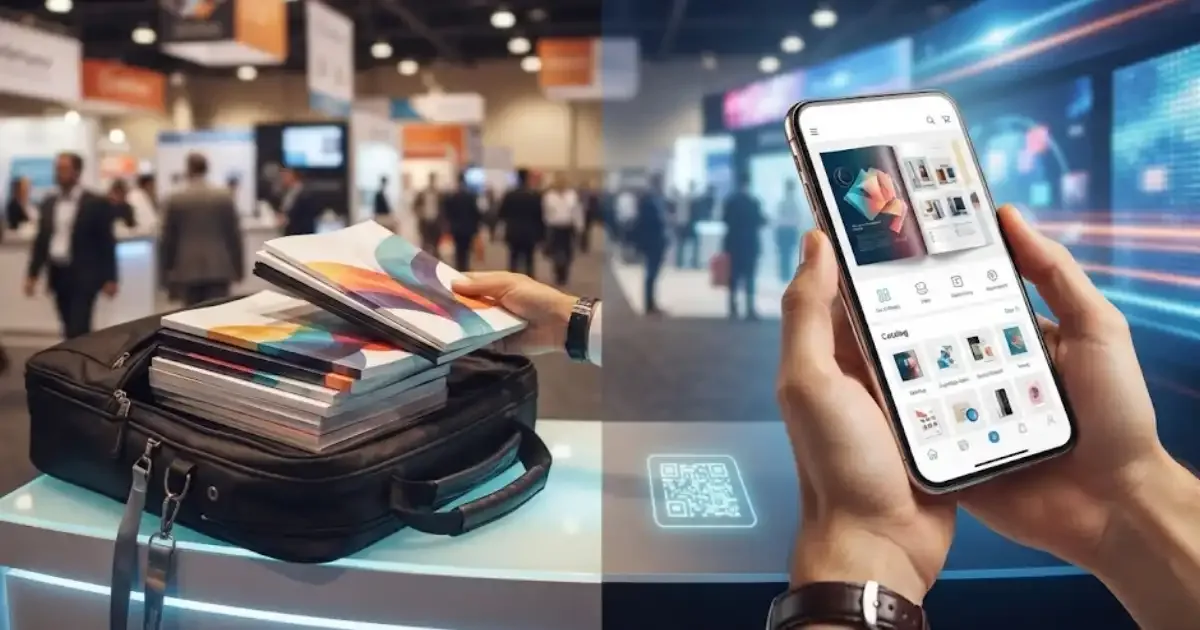
Making a catalog used to mean arranging products neatly, handing out printed copies at trade shows, and emailing a PDF version. It went stale the day it was finished and stayed that way for months.
Today's B2B buyer doesn't work that way. They compare products, check technical specs, and make decisions much faster — often without ever sitting down at a desk, straight from their phone. A modern digital catalog can't just "show the product" anymore; it has to guide that person from first contact all the way to purchase.
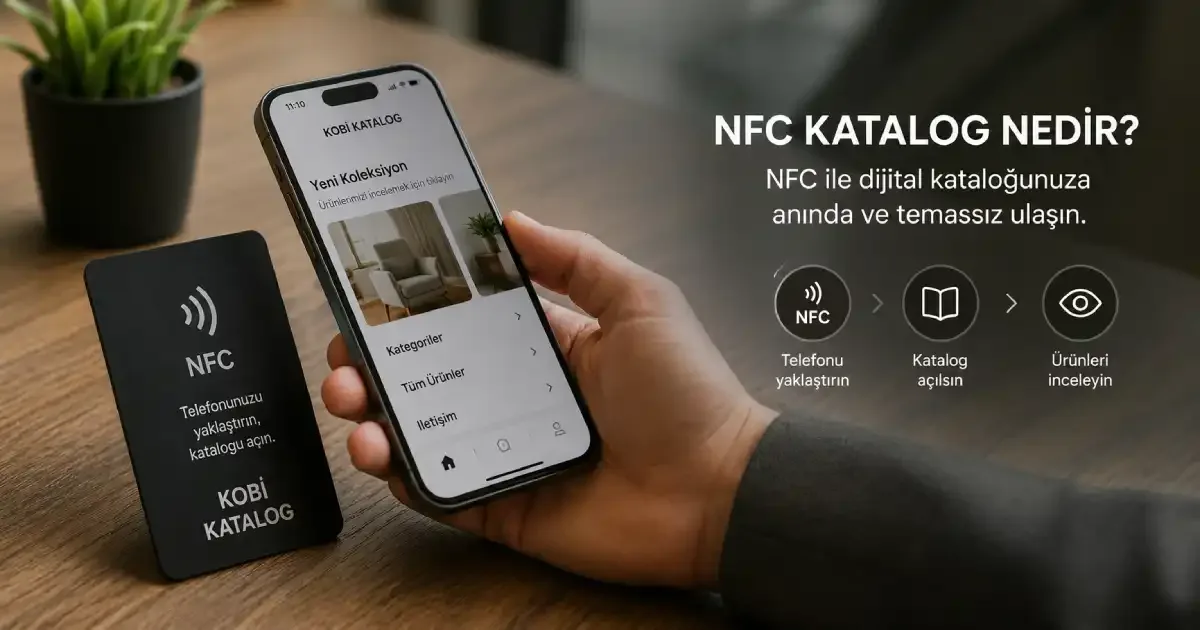
Reach the catalog in a single tap with NFC
In B2B sales, first impressions decide a lot. At a trade show, a dealer visit, or a client meeting, sharing a long link or saying "I'll email you the PDF" slows things down. An NFC-enabled business card or product tag makes the whole interaction smoother.
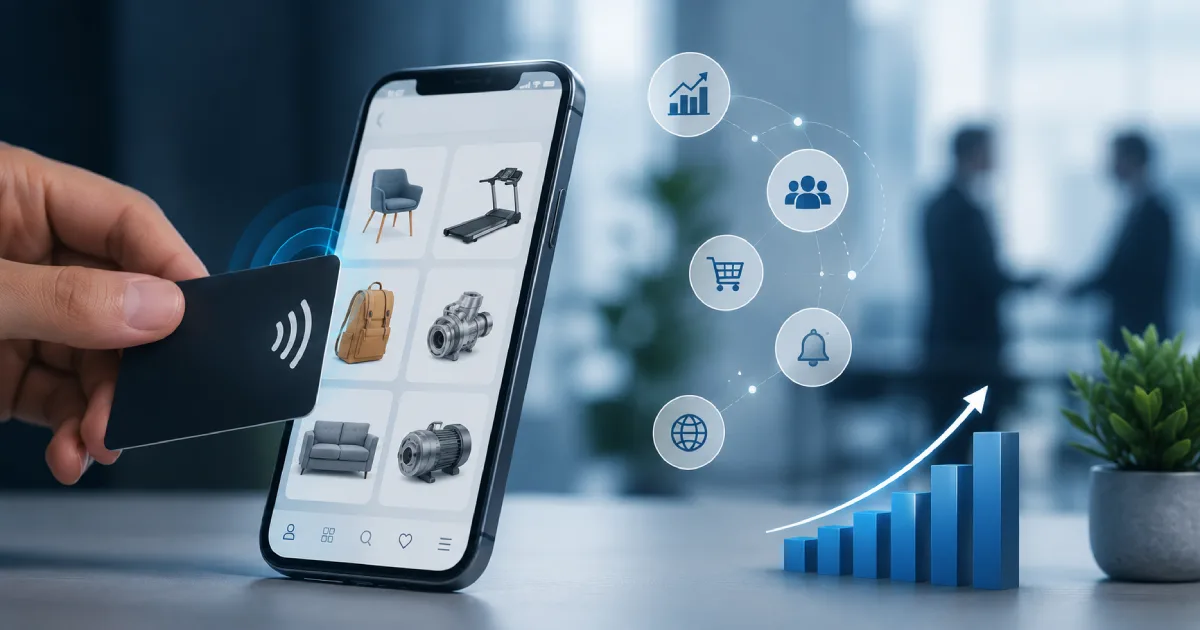
A customer who taps their phone lands on the digital catalog in seconds — they can browse products, open technical documents, request a quote on the spot, or reach a sales rep directly. Add QR code support alongside NFC, and the experience works on any phone, no compatibility issues.
Favorites speed up the B2B sales process
In B2B, the decision rarely happens on the first visit. Buyers want to remember what they looked at, come back to it later, and maybe compare a couple of options. That's exactly what the favorites feature in a digital catalog solves — it looks like a small detail, but it noticeably smooths out the purchase journey.
The connection doesn't end when the visit does
The real strength of a digital catalog is that it keeps working after the first conversation ends. When a customer follows a product or category, they get notified automatically the moment the price changes, stock updates, a new variant appears, or a technical document is revised.
That turns the catalog from a one-time information page into a living system that stays in constant touch with the customer.
Information stays current, always
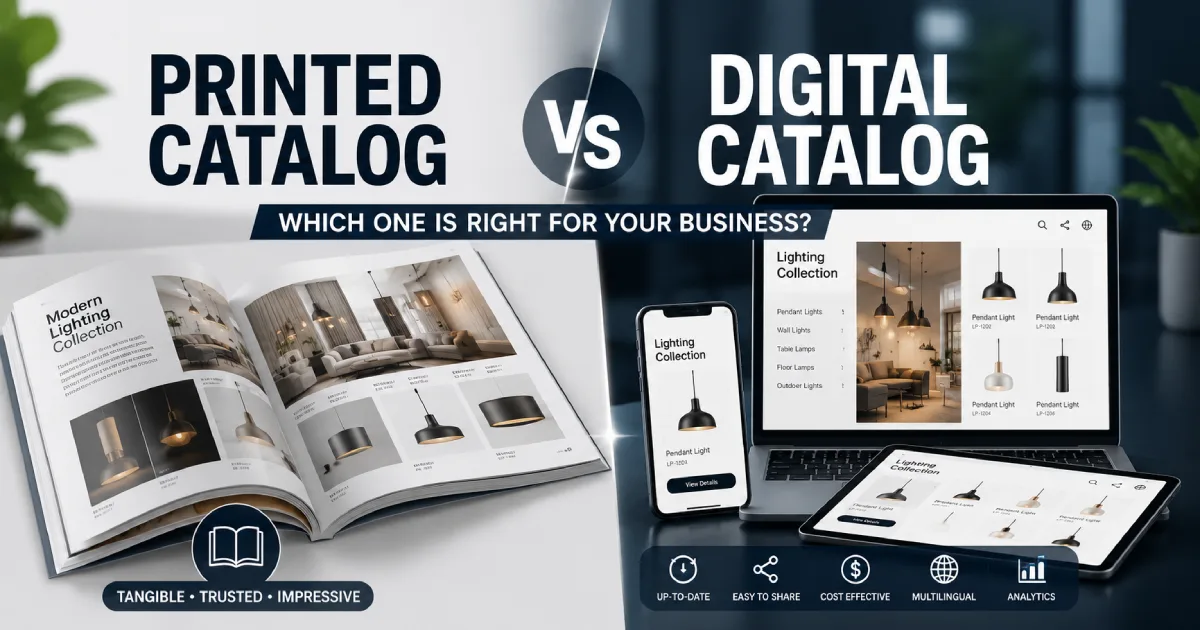
A printed catalog or PDF starts going out of date the moment it's finished. A price change, an updated spec, a new image — any of it means starting the whole production process over.
A web-based digital catalog works differently. Changes go live instantly, so customers always see the most current product information, every time they visit.
AI-powered search gets buyers to the right product in seconds
As the product count grows, finding the right one gets harder. AI-powered search solves this — customers don't need to memorize a product code, they can search the digital catalog in their own words. Typing something like "outdoor LED lighting," "stainless steel sliding door system," or "220V industrial fan" is enough to surface the right products in seconds.
That makes the experience smoother for the buyer and speeds up the sales process on your end.
Multilingual catalogs open the door to new markets
For exporting companies, language shouldn't be a barrier. A modern multilingual catalog lets you present products in different languages, translate technical specs, and give foreign buyers a way to browse confidently in their own language. For a company looking to expand internationally, that's not a nice-to-have — it's a real advantage.
Voice narration makes the catalog accessible to everyone
With talking catalog features, product descriptions can be listened to instead of read. For busy professionals, foreign visitors, or users who need accessibility support, this makes the catalog experience considerably easier and more inclusive.
Shorten the path to the sale
A good digital catalog doesn't stop at showing products. Having a WhatsApp button, a quote request form, a call option, an email link, and a map location on every product page makes it easy for the customer to reach your sales team — and that translates directly into higher conversion rates.
In conclusion: the digital catalog is now a B2B sales platform
Competition in B2B is tightening every day. Customers no longer expect just a quality product — they expect fast information, easy access, and uninterrupted communication.
NFC and QR code support, favorites, product tracking, automatic notifications, AI-powered search, multilingual structure, and instantly updatable content — together, these leave the classic catalog behind. With KOBİ Katalog, positioning your digital catalog not as a static showcase but as a smart B2B sales platform that stays in constant conversation with your customers can make a real difference in your sales process.